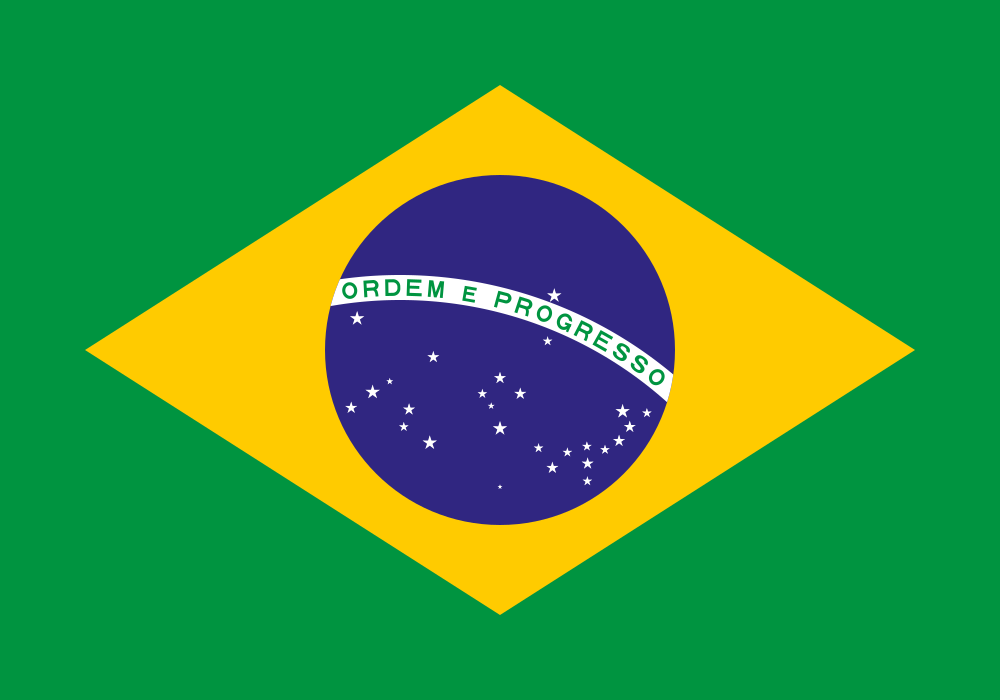
Brazil
Country
Member state of the United Nations.[1]
- Population
- 212,812,405 in 2025[3]
- Land area
- 8,358,140 km²[4]
- Total area
- 8,515,767 km²[5] land and water
- Official language
- Currency
- Land borders
- France, Brazilian Island, Argentina, Peru, Venezuela, Suriname, Paraguay, Guyana, Colombia, Bolivia, Uruguay[9]
- Coast
- Yes[9]
- Continent
- Official name
- República Federativa do Brasil[10]
Parts of Brazil
Loading 27 places.
Through time
72,388,126 in 1960, 212,812,405 in 2025
Show as a table
| Year | Population |
|---|---|
| 1960 | 72,388,126 |
| 1961 | 74,605,447 |
| 1962 | 76,865,323 |
| 1963 | 79,164,235 |
| 1964 | 81,488,595 |
| 1965 | 83,817,583 |
| 1966 | 86,139,359 |
| 1967 | 88,446,124 |
| 1968 | 90,741,240 |
| 1969 | 93,045,777 |
| 1970 | 95,375,651 |
| 1971 | 97,739,273 |
| 1972 | 100,146,797 |
| 1973 | 102,600,976 |
| 1974 | 105,089,675 |
| 1975 | 107,619,565 |
| 1976 | 110,213,349 |
| 1977 | 112,875,292 |
| 1978 | 115,600,942 |
| 1979 | 118,380,821 |
| 1980 | 121,207,461 |
| 1981 | 124,063,109 |
| 1982 | 126,923,155 |
| 1983 | 129,790,077 |
| 1984 | 132,658,864 |
| 1985 | 135,515,595 |
| 1986 | 138,336,370 |
| 1987 | 141,104,944 |
| 1988 | 143,826,357 |
| 1989 | 146,502,972 |
| 1990 | 149,143,223 |
| 1991 | 151,724,256 |
| 1992 | 154,275,079 |
| 1993 | 156,794,577 |
| 1994 | 159,265,006 |
| 1995 | 161,735,073 |
| 1996 | 164,202,549 |
| 1997 | 166,661,659 |
| 1998 | 169,159,655 |
| 1999 | 171,641,543 |
| 2000 | 174,018,282 |
| 2001 | 176,301,203 |
| 2002 | 178,503,484 |
| 2003 | 180,622,688 |
| 2004 | 182,675,143 |
| 2005 | 184,688,101 |
| 2006 | 186,653,106 |
| 2007 | 188,552,320 |
| 2008 | 190,367,302 |
| 2009 | 192,079,951 |
| 2010 | 193,701,929 |
| 2011 | 195,284,734 |
| 2012 | 196,876,111 |
| 2013 | 198,478,299 |
| 2014 | 200,085,127 |
| 2015 | 201,675,532 |
| 2016 | 203,218,114 |
| 2017 | 204,703,445 |
| 2018 | 206,107,261 |
| 2019 | 207,455,459 |
| 2020 | 208,660,842 |
| 2021 | 209,550,294 |
| 2022 | 210,306,415 |
| 2023 | 211,140,729 |
| 2024 | 211,998,573 |
| 2025 | 212,812,405 |
Earlier capitals
- until 22 April 1960 Rio de Janeiro[11]
Learn more
- Simple English Wikipedia easier reading
- Wikipedia
- Wikidata the structured data behind many facts here
Codes
Changes to this page's data
No changes recorded since the dataset of 5 November 2026.
Sources
- United Nations: Member States Published directly by the source.
- Wikidata: Brazil (Q155), capital: Brasília Wikidata statement that does not cite a source yet.
- World Bank, World Development Indicators: Population, total (SP.POP.TOTL) Published directly by the source.
- World Bank, World Development Indicators: Land area (sq. km) (AG.LND.TOTL.K2) Published directly by the source.
- Wikidata: Brazil (Q155), area Wikidata statement that does not cite a source yet.
- Wikidata: Brazil (Q155), official language: Portuguese Wikidata statement that cites its own sources.
- Cites: http://www.planalto.gov.br/ccivil_03/_Ato2007-2010/2008/Decreto/D6583.htm
- Cites: Constitution of Brazil
- Wikidata: Brazil (Q155), currency: Brazilian real Wikidata statement that does not cite a source yet.
- Wikidata: Brazil (Q155), continent: South America Wikidata statement that cites its own sources.
- Cites: https://www.workwithdata.com/place/brazil, retrieved 11 October 2024
- Natural Earth: Admin 0 countries, 1:50m Published directly by the source.
- Wikidata: Brazil (Q155), official name Wikidata statement that does not cite a source yet.
- Wikidata: Brazil (Q155), capital: Rio de Janeiro Wikidata statement that does not cite a source yet.
- Wikidata: Brazil (Q155), ISO 3166-1 alpha-2 code Wikidata statement that does not cite a source yet.
- Wikidata: Brazil (Q155), ISO 3166-1 alpha-3 code Wikidata statement that does not cite a source yet.
- Wikidata: Brazil (Q155), ISO 3166-1 numeric code Wikidata statement that does not cite a source yet.
Flag image: Flag of Brazil.svg, Public domain, Raimundo Teixeira Mendes, via Wikimedia Commons.